




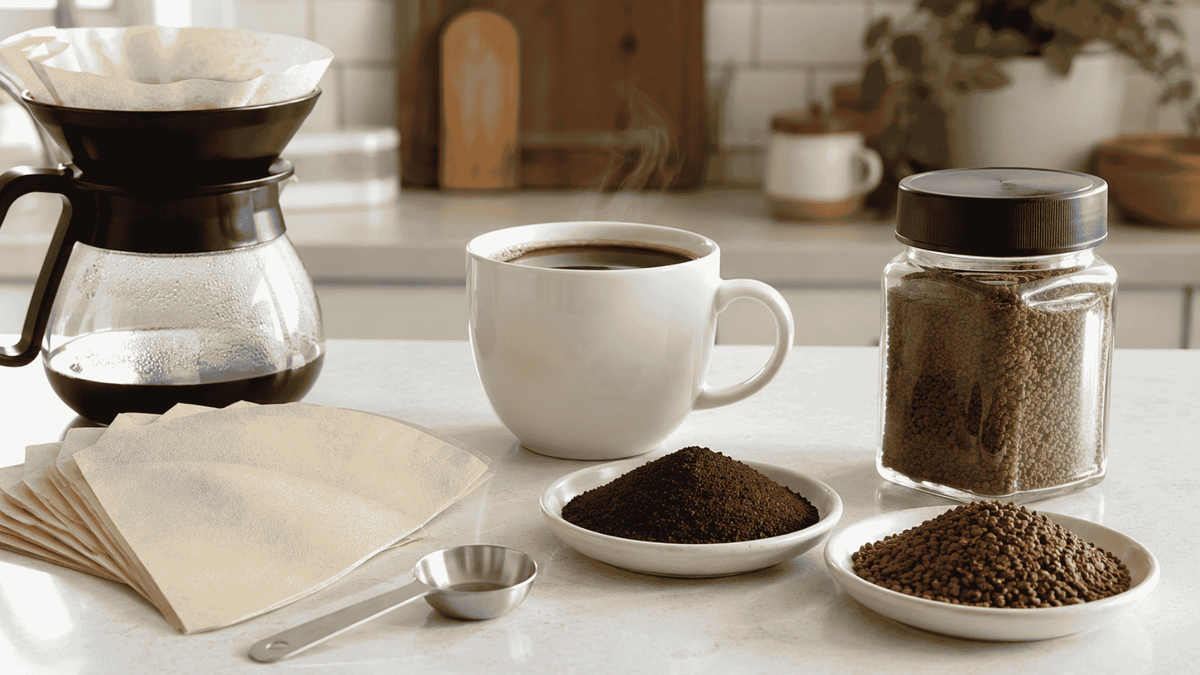
You cannot turn regular ground coffee directly into dissolvable instant coffee. Ground coffee must still be brewed and filtered, while instant coffee is made from coffee that has already been extracted and dried.
However, you still have several practical options. You can steep and filter ground coffee without a machine, prepare coffee concentrate ahead of time, or use a compact brewer when you are away from home. This guide explains what works, what does not, and how to choose the most convenient method for your situation.
Can You Make Instant Coffee From Ground Coffee?
Regular ground coffee cannot be converted into instant coffee simply by grinding it more finely or mixing it with hot water.
Ground coffee consists of roasted coffee bean particles. When you add hot water, some flavor compounds, caffeine, acids, and other soluble materials move from the grounds into the water. The remaining coffee particles do not dissolve. They must be filtered out or allowed to settle at the bottom of the cup.
Instant coffee is different because it has already been brewed. Manufacturers extract coffee into water, remove the spent grounds, concentrate the liquid, and dry the coffee extract. Spray-drying and freeze-drying are both recognized methods of dehydrating liquid coffee extract to produce soluble coffee.
For most people, the practical options at home are:
- Brew ground coffee directly and remove the grounds before drinking.
- Prepare filtered coffee concentrate in advance.
- Use a compact brewing method when convenience matters.
Freeze-drying is a specialized food-processing method rather than a routine kitchen shortcut, so it is discussed separately later in this guide.
Ground Coffee vs Instant Coffee
The main difference is not how finely the coffee is ground. It is whether the coffee has already been brewed and dried.
| Feature | Ground Coffee | Instant Coffee |
|---|---|---|
| What it contains | Roasted coffee bean particles | Dried soluble coffee extract |
| Already brewed | No | Yes |
| Dissolves in water | No | Yes |
| Usually needs filtering | Yes | No |
| Preparation time | Several minutes | Usually less than a minute |
| Sediment in the cup | Possible | Usually minimal |
| Flavor | Varies by beans and brewing method | Consistent and convenient |
| Best use | Freshly brewed coffee | Fast preparation |
Grinding coffee into a powder changes the size of the particles, but it does not turn those particles into dried coffee extract.
Very fine grounds may remain suspended in water for longer, which can make the drink appear smoother at first. They will eventually settle or leave a gritty texture because they have not truly dissolved.
Why Extra-Fine Grounds Are Not Instant Coffee

Some online methods recommend grinding coffee beans into an extremely fine powder, passing the powder through a sieve, and storing it in an airtight container. The powder is then stirred into hot water and described as homemade instant coffee.
This method can produce a drink, but the result is closer to unfiltered coffee than instant coffee.
You may notice:
- Fine sediment at the bottom of the cup
- A muddy or gritty mouthfeel
- Small coffee particles remaining after stirring
- More bitterness if the grounds stay in the water
- A need to wait before drinking or pour carefully
Turkish coffee also uses powder-like grounds, but it is still brewed coffee. The grounds are not converted into soluble granules.
Using extra-fine coffee can work as a temporary no-filter method, provided you understand the result. It should not be presented as a way to manufacture genuine instant coffee.
How to Brew Ground Coffee Without a Machine

When you have coffee grounds but no brewer, you can make a simple cup with hot water, a mug, and a basic filtering method.
Measure the Coffee and Water
For an 8-fluid-ounce cup, begin with approximately 13 to 15 grams of coffee. You can adjust the amount after tasting the finished drink.
Medium or medium-fine grounds are usually easier to separate from the liquid than powder-like coffee. Very fine particles can pass through a metal strainer or remain suspended in the cup.
Heat fresh water until it is hot, then let it settle briefly after boiling before pouring.
Steep the Grounds
Place the ground coffee in a heat-safe mug or container. Add enough hot water to wet all the grounds, then pour in the remaining water.
Stir gently and allow the coffee to steep for approximately four minutes. Longer contact time can produce a stronger drink, but it may also increase bitterness.
After steeping, let the coffee rest briefly so some of the grounds settle.
Filter and Serve
For the cleanest cup, pour the coffee through a paper filter into a second mug. You can also use:
- A reusable coffee filter
- A clean, tightly woven cloth
- A fine-mesh strainer
- An empty tea infuser large enough for the grounds
A metal strainer may allow very small particles through, so expect some sediment.
Without a filter, wait for the grounds to sink and slowly pour the coffee into another cup. Stop pouring before the sediment reaches the rim.
This method produces freshly brewed coffee, not instant coffee. It is still a practical solution when you do not have a coffee maker.
How to Make Coffee Concentrate for Faster Drinks
Coffee concentrate is one of the most practical homemade alternatives when your main priority is faster daily preparation.
You brew and filter the coffee ahead of time, refrigerate it, and dilute a small amount when you want a drink. It does not become instant coffee powder, but it can reduce daily preparation to a few seconds.
Make a Hot Coffee Concentrate
Prepare a small batch using a higher coffee-to-water ratio than you would use for a normal cup. The exact ratio depends on your brewing method, grind size, roast, and preferred strength.
Steep or brew the coffee using your available equipment, then filter it thoroughly. Paper filtration generally removes more fine particles than a basic metal strainer.
To serve it, begin by combining equal parts concentrate and hot water. Taste the drink and add more water as needed. You can also dilute it with milk for a stronger café-style drink.
Prepare only a manageable quantity until you know how quickly you will use it.
Transfer the filtered concentrate to a clean, sealed container and refrigerate it promptly at 40°F (4°C) or below. Prepare small batches and use them promptly rather than relying on a fixed homemade shelf life. FDA guidance recommends keeping refrigerators at or below this temperature and discarding food or drinks that look or smell suspicious.
Prepare Cold Brew Concentrate

Cold brew concentrate is another useful make-ahead option. It combines coarse ground coffee, cool water, a long steeping period, and thorough filtration.
The coffee-to-water ratio and steeping time vary depending on whether you want ready-to-drink cold brew or a concentrate that will be diluted. Follow the complete guide to how to make cold brew coffee rather than treating every cold brew recipe the same.
Once filtered, transfer the coffee to a clean, sealed container and refrigerate it promptly at 40°F (4°C) or below. Do not add milk or creamer to the full stored batch. Add those ingredients only when serving.
Dilute the Concentrate Before Drinking
Coffee concentrate is usually intended to be diluted.
Begin with:
- One part concentrate
- One part water or milk
Taste the drink before adding more liquid. Some concentrates may need two parts water for every part of coffee.
The final ratio will depend on:
- The original brew strength
- Coffee bean and roast
- Grind size
- Brewing time
- Whether the drink is served hot or iced
Coffee concentrate offers make-ahead convenience while still giving you a freshly brewed alternative to instant coffee.
Why Making True Instant Coffee at Home Is Difficult
True instant coffee is produced by brewing and filtering coffee, concentrating the liquid, and then drying the extract into a low-moisture soluble product.
Commercial manufacturers generally use spray-drying or freeze-drying. These methods remove water from coffee extract while creating a dry product that can be rehydrated later.
A home freeze dryer may be able to dry filtered coffee, but the result depends on factors such as:
- The freeze dryer model
- Cycle settings
- Depth of the coffee on the tray
- Sugar and oil content
- Final residual moisture
- Packaging and storage conditions
Because there is no single validated household process that applies to every machine, homemade freeze-dried coffee should not automatically be treated as a reliably shelf-stable instant coffee product.
Vacuum sealing alone does not make moist food safe or shelf-stable. Food must be dried to a sufficiently low residual moisture level before storage, and the final dryness needs to be verified.
A food dehydrator or oven uses a different drying process and should not be presented as a reliable replacement for freeze-drying. For most households, filtered concentrate or a portable brewer is more practical than attempting to manufacture instant coffee.
Choose the Best Quick Coffee Method
The right method depends on whether you prioritize convenience, freshness, portability, or advance preparation.
| Method | Preparation Needed | Time When Serving | Sediment | Best For |
|---|---|---|---|---|
| Instant coffee granules | None | Less than a minute | Very little | Everyday convenience |
| Cup steeping | Brew each cup | Several minutes | Possible | No-machine situations |
| Coffee concentrate | Prepare ahead | Seconds | Low if filtered | Home or office |
| Pour-over coffee bag | Add hot water | Several minutes | Low | Travel |
| Portable coffee brewer | Carry grounds and device | Several minutes | Low | Fresh coffee away from home |
| Home freeze-drying | Specialized equipment and validation | Quick after processing | Low if successful | Experienced home food processors |
Cup steeping is the simplest choice when you only need one drink and have no equipment.
Coffee concentrate is more convenient for repeated use because the brewing and filtering are completed in advance.
A portable brewer makes sense when you want fresh coffee away from home and do not want to rely on instant coffee.
Faster Coffee When You Are Away From Home
Instant coffee is useful during travel because it requires little more than a cup and hot water. However, several compact brewing methods allow you to use regular ground coffee instead.
Pour-over coffee bags contain coffee inside a built-in filter. Place the bag over a cup and pour hot water through it according to the product instructions. They are lightweight and require very little cleanup, although each bag is normally intended for one use.
A compact pour-over cone or travel press is another practical choice when hot water is available. Both methods separate the grounds from the finished drink.
When a fresh espresso is the goal, the OutIn Nano portable espresso maker can brew ground coffee while traveling, camping, or working away from a kitchen.

Nano Portable Espresso Machine (Fuchsia Pink)
It is best suited to users who want a compact, espresso-size serving and are comfortable carrying, charging, and cleaning a small brewer. The Nano supports ground coffee and capsules and uses approximately 50 to 80 milliliters of water per brew, so it is not intended to replace a full mug of drip coffee or the zero-equipment convenience of instant coffee.
Common Mistakes to Avoid
Expecting Ground Coffee to Dissolve
Ground coffee may disperse through the water, but the physical particles do not truly dissolve. More stirring or hotter water will not convert the grounds into instant coffee.
Grinding Coffee Into Dust
Powder-like grounds are difficult to filter and may make the drink gritty. Choose a grind size that works with the filter or strainer you have available.
Pouring Before the Grounds Settle
When brewing directly in a cup, allow the coffee to rest briefly after steeping. Pouring too quickly can carry more sediment into the drinking cup.
Confusing Espresso Powder With Instant Coffee
Products labeled espresso powder can vary.
Many are soluble, concentrated coffee products marketed for baking. Finely ground espresso beans, however, are not soluble. Check the ingredient list and preparation directions rather than assuming every espresso powder works like instant coffee.
Read more about the differences between instant coffee and espresso powder.
Treating a Food Dehydrator Like a Freeze Dryer
The two machines remove moisture through different processes. A dehydrator should not be expected to reproduce commercially freeze-dried coffee.
Storing Homemade Concentrate Too Long
Homemade coffee does not have the same processing and packaging controls as shelf-stable instant coffee.
Use clean equipment, refrigerate the concentrate promptly, and prepare small batches. Discard it if you notice mold, an unusual smell, unexpected cloudiness, gas buildup, or a significant change in flavor.
Frequently Asked Questions
Can Ground Coffee Dissolve in Hot Water?
No. Hot water extracts soluble substances from the coffee, but the physical grounds remain. They must settle or be filtered out.
Can I Use Ground Coffee Like Instant Coffee?
You can add ground coffee directly to hot water, but the result is unfiltered brewed coffee. It may contain sediment and should not be confused with instant coffee.
What Can I Use if I Do Not Have a Coffee Filter?
A clean cloth, fine-mesh strainer, reusable tea infuser, or several layers of clean cheesecloth can help separate the grounds. You can also let the grounds settle and slowly pour the coffee into another cup.
How Do I Make Coffee From Grounds Without a Machine?
Steep the grounds in hot water for approximately four minutes, let them settle briefly, and filter or carefully pour the coffee into a clean cup.
Can I Dehydrate Brewed Coffee to Make Instant Coffee?
A standard dehydrator is not a reliable substitute for the spray-drying or freeze-drying processes used to produce soluble coffee. A home freeze dryer may dry filtered coffee, but the process and shelf stability must be validated for the specific equipment and storage method.
Is Espresso Powder the Same as Instant Coffee?
Not necessarily. Some espresso powders are soluble products intended mainly for baking, while finely ground espresso coffee does not dissolve. Always check the ingredients and preparation instructions.
Can I Use Ground Coffee to Make Iced Coffee?
Yes. Brew and filter the coffee first, then allow it to cool before pouring it over ice. You can also dilute refrigerated cold brew concentrate with water or milk.
Final Thoughts
Regular ground coffee cannot become true instant coffee simply by being ground more finely or stirred into hot water. It still needs to be brewed, and the remaining particles must be filtered or allowed to settle.
For a quick cup without a machine, steep and filter the grounds. For repeated use, prepare a small amount of refrigerated coffee concentrate. When traveling, pour-over bags and portable brewing tools provide fresher alternatives without requiring a conventional coffee machine.
Producing genuinely soluble coffee requires controlled drying and verification, which makes it impractical for most households. The best everyday option is therefore the method that matches your actual priority: instant coffee for simplicity, concentrate for advance preparation, or a compact brewer for freshly extracted coffee away from home.
