












Espresso channeling happens when pressurized water finds easier paths through the coffee puck instead of flowing evenly across it. Some areas receive too much water while others receive too little, creating uneven extraction. Spraying, broken streams, and mixed sour-bitter flavors can indicate channeling, but no single visual sign proves it by itself.
Water Follows the Weakest Part of the Puck
An espresso puck is a compact porous bed rather than a solid barrier. Water must move through spaces between thousands of coffee particles. When density and resistance are reasonably even, the flow spreads across much of the puck. When one area is looser, cracked, poorly filled, or easier to penetrate, more water begins moving through that route.
The preferred path can become more pronounced during extraction. Water dissolves material from the grounds along the channel, potentially opening the route further while less water reaches the surrounding coffee. The shot can therefore contain heavily washed areas alongside sections that remain under-extracted.
Channeling is not simply “water moving quickly.” A shot may run fast because the entire grind is too coarse, or it may run slowly while still channeling through a small weak area inside an otherwise restrictive puck. Diagnosis requires several clues together.
Signs of Espresso Channeling
A bottomless portafilter makes some flow problems visible because the underside of the basket is exposed. Espresso may emerge from isolated points, spray sideways, form separate streams that do not combine, or suddenly shift position. These observations are useful, but appearance varies with basket design, coffee freshness, roast level, and extraction profile.
|
What you notice |
What it may indicate |
What to check next |
|
Sideways espresso spraying |
A fast localized path reaching an exposed basket hole |
Distribution, cracks, basket cleanliness, and basket fit |
|
Several uneven streams |
Uneven resistance across the puck |
Dose distribution and whether the tamp is level |
|
One side begins flowing much earlier |
Tilted coffee bed, uneven fill, or uneven water delivery |
Puck level and shower-screen flow |
|
Shot tastes sour and bitter together |
Different areas extracting at different rates |
Distribution before changing the overall shot time |
|
Flow accelerates abruptly |
Puck erosion or a channel opening during extraction |
Grind, dose, headspace, and pressure profile |
|
Fast but visually even flow |
Grind may simply be too coarse |
Move slightly finer and repeat the same recipe |
Taste and repeatability matter more than one dramatic-looking shot. Occasional small jets do not always ruin the cup, while invisible internal channeling can still produce uneven flavor.
What Causes Espresso Channeling?
Channeling usually begins with uneven resistance, but several preparation and equipment variables can create that imbalance.
Uneven Distribution and Coffee Clumps
If more coffee settles on one side of the basket, that area becomes denser after tamping. If fine grounds remain in clumps, the puck contains compact regions beside looser gaps. Water naturally favors the less resistant spaces.
Distribution should move coffee through the depth of the basket rather than only making the surface look flat. Tapping, stirring, or leveling too aggressively can create new density layers or cracks, so the goal is a repeatable technique rather than the largest number of preparation steps.
A Tilted or Disturbed Tamp

Tamping compresses the distributed coffee into a stable bed. A visibly tilted tamp creates different puck depths and resistance across the basket. Once the coffee is compressed, polishing, knocking the portafilter, or striking its side can separate the puck from the basket wall and create a path around the edge.
Exact tamping force is less useful than keeping the bed level and repeating the same motion. Once the grounds are firmly compressed, substantially greater force does not correct poor distribution underneath.
Grind Size at Either Extreme
A coarse grind may provide too little resistance, causing the complete shot to run quickly. That is not always channeling, although coarse particles and poor distribution can still produce uneven paths.
An excessively fine grind can also increase channeling risk. The puck may become so restrictive that water exploits a small defect instead of moving through the bed evenly. Fines can migrate and block parts of the basket while another area opens into a faster route. Grinding finer is therefore not the correct response to every spray or fast stream.
Dose, Basket Fit, and Headspace
Too little coffee can leave an unusually shallow puck that is easier to disturb. Too much coffee may press against the shower screen before brewing, damage the dry puck, or leave insufficient room for expansion. The appropriate dose depends on the basket’s intended capacity, the coffee’s density, and the machine.
An imprint on a spent wet puck does not automatically prove that the dry dose was excessive, because the puck expands during brewing and may move when pressure is released. Check dry headspace and basket guidance rather than diagnosing only from the used puck.
Water Distribution and Equipment Condition
Even puck preparation cannot fully compensate for a blocked shower screen, dirty basket holes, damaged group gasket, or water entering heavily from one side. If channeling repeatedly appears in the same location despite controlled preparation, inspect and clean the equipment.
Basket geometry also affects how flow appears. Switching baskets can change the workable dose and grind even when the coffee and machine stay the same. Treat a new basket as a recipe change rather than expecting the old settings to transfer perfectly.
How to Fix Espresso Channeling in the Right Order

Changing several variables at once makes it impossible to know what solved the problem. Use a controlled sequence:
-
Confirm that the basket, portafilter, shower screen, and group gasket are clean and undamaged.
-
Weigh a dose appropriate for the basket and keep that dose unchanged during the first tests.
-
Break up obvious clumps and distribute the grounds evenly through the basket without creating deep gaps.
-
Tamp once on a stable surface, keeping the coffee bed level, then avoid knocking or twisting the portafilter.
-
Pull the shot to the same beverage weight and record total time, first-drop behavior, visible flow, and taste.
-
If the entire shot runs quickly and tastes thin or sour, move slightly finer; if it is very slow yet still sprays, consider moving slightly coarser.
-
Change pressure or pre-infusion settings only after grind, dose, distribution, and equipment condition are reasonably stable.
This order addresses the largest sources of variation before advanced pressure profiling. A complicated workflow cannot compensate for an inconsistent dose or a coffee bed that begins unevenly distributed.
Espresso Spraying From a Bottomless Portafilter
Espresso spraying occurs when a narrow high-speed stream exits an exposed basket hole and travels sideways. A bottomless portafilter makes the spray visible; a spouted portafilter may contain the same flow without showing it externally.
Spraying often points to localized uneven flow, but first rule out simple equipment issues. Coffee residue or a partially blocked basket hole can redirect liquid. A basket that is wet on the outside before brewing may also produce confusing droplets that are not coming through the puck normally.
When spraying occurs repeatedly, return to dose and distribution. Make sure coffee reaches the edges of the basket, remove deep clumps, and tamp level. If preparation is repeatable but the shot is extremely slow before spraying begins, the grind may be too fine and the puck may be forcing water through a small defect.
Do not chase a perfectly centered visual cone at the expense of taste. Different baskets and coffees can produce asymmetrical-looking streams without creating a bad espresso. The goal is a balanced and repeatable cup, not a social-media image.
How Channeling Changes the Taste
Water moving quickly through a channel can over-wash the grounds beside that path while leaving other parts of the puck with limited contact. The finished espresso may combine sharp sourness, bitterness, dryness, thin body, or a hollow finish.
Those mixed sensations help distinguish uneven extraction from a uniformly under-extracted shot. A shot that is simply too fast and coarse often tastes thin and sour in a more consistent way. When sourness appears together with harsh bitterness, improve distribution before extending the entire extraction. The related guide to why coffee tastes sour explains how to separate under-extraction from naturally bright acidity.
Channeling does not create one guaranteed flavor because its severity and location vary. Milk and syrup can mask some defects, but they do not make the extraction more even.
Control Grind and Measurement Before Adding More Tools
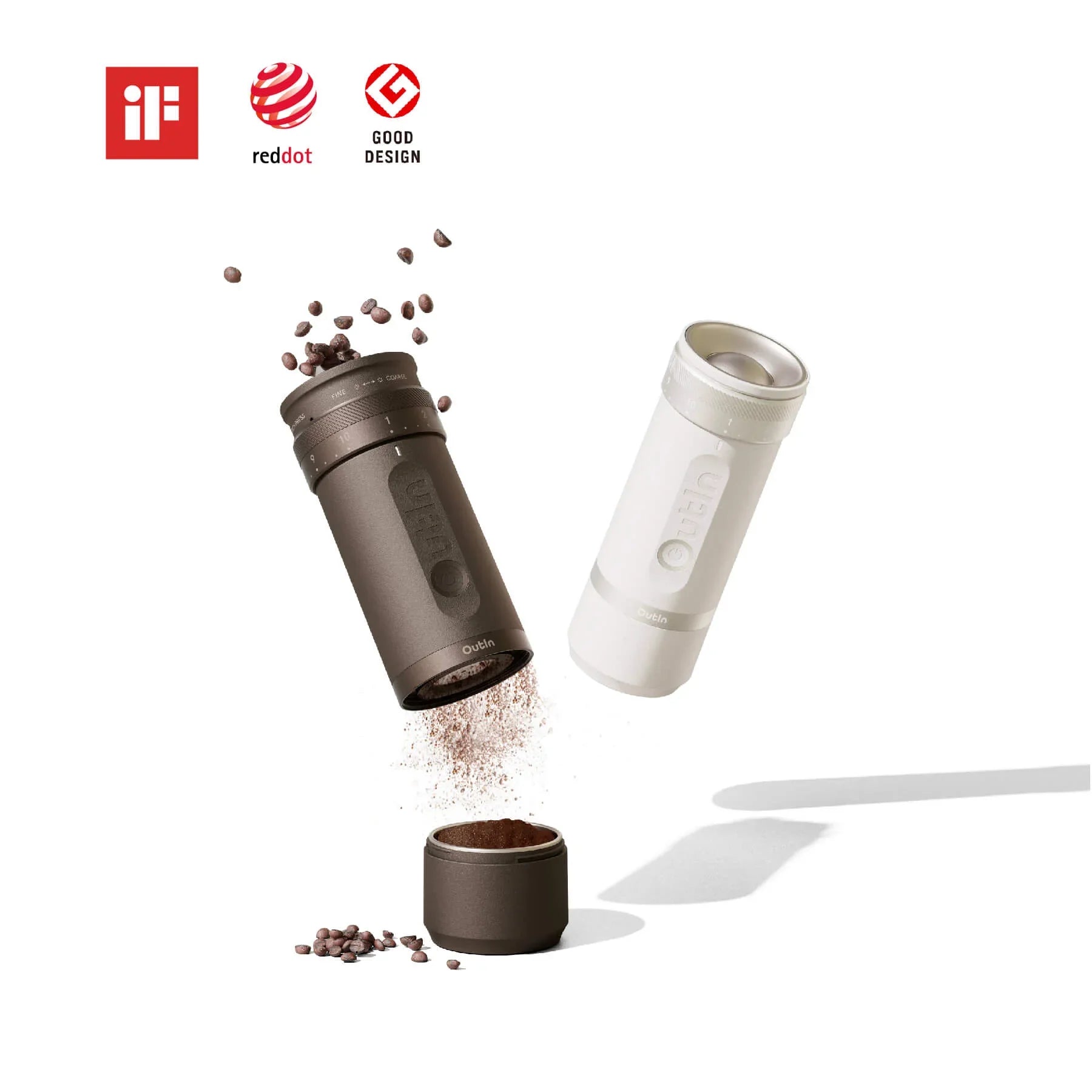
Repeatable grounds and measurements make channeling easier to diagnose. The OutIn Fino Portable Electric Coffee Grinder provides adjustable espresso grind settings, allowing a small change when a shot is uniformly fast or when an overly restrictive puck needs slightly less resistance.

OutIn Fino Portable Electric Coffee Grinder
Broader principles for changing grind without confusing other variables are covered in this espresso grind adjustment guide.
The OutIn Claro Coffee Scale can measure espresso output and track flow time in Espresso Mode. Beverage weight and time cannot prove that a puck is free from channels, but they reveal whether a preparation change also altered the overall shot. Record taste alongside the numbers because two shots with similar yield and time can still extract differently.
A distribution needle tool, dosing funnel, self-leveling tamper, or puck screen may help a specific workflow, but none is mandatory for every machine. Add one tool only when it addresses an observed problem, then compare multiple shots before deciding whether it improves consistency.
Why the Spent Puck Can Be Misleading
Holes, cracks, a wet surface, or a shower-screen imprint often attract attention after brewing. However, the puck changes when the machine releases pressure, the portafilter is removed, or the basket is knocked. Damage seen afterward may not have existed during the main extraction.

A muddy puck can result from dose, headspace, basket design, or the machine’s pressure-release system without proving channeling. A dry, neat puck can still have extracted unevenly. Use the spent puck as one clue, not as the final diagnosis.
More reliable evidence comes from repeated behavior: similar spraying in several shots, consistent early flow from one area, contradictory flavors, or poor results that improve after distribution is corrected.
When the Problem May Be the Machine
If channeling always appears in the same area after dose, distribution, tamp, grind, and basket have been controlled, test the machine’s water delivery. With no coffee installed and while following the manufacturer’s safe cleaning procedure, observe whether water exits the shower screen broadly or favors one side.
Clean removable components according to the manual and check that basket holes are open. Replace damaged seals or distorted baskets with compatible parts. Do not disassemble pressurized or electrical components unless the manufacturer authorizes the procedure.
Machine-side diagnosis becomes especially important when several users and coffees produce the same uneven pattern. A preparation problem normally changes when the puck routine changes; a blocked or misaligned water-delivery component may remain fixed in one location.
Conclusion
Espresso channeling is uneven flow through paths of lower resistance in the coffee puck. It can appear as spraying, early flow from one area, unstable streams, or a shot that tastes sour and bitter at the same time. None of those signs is conclusive alone.
Fix the problem systematically: clean the equipment, use an appropriate dose, distribute through the full puck depth, tamp level, measure the shot, and then make a small grind adjustment. Judge improvement through repeated taste and flow results rather than expecting one perfect-looking extraction.
FAQs
Can channeling occur with a pressurized basket?
Yes. A pressurized basket creates resistance at its outlet, which can hide the visual behavior of the puck above it. Uneven wetting can still occur, but diagnosis relies more on taste and repeatability than exposed basket flow.
Does coffee freshness affect channeling?
It can. Very fresh coffee releases more gas and may behave differently during wetting, while older coffee may require a different grind to maintain resistance. Adjust the recipe gradually instead of using roast date as proof of channeling.
Can grinder static contribute to channeling?
Static can promote retention and clumping, which may make an even dose harder to prepare. Follow the grinder manufacturer’s cleaning and anti-static guidance rather than adding moisture without confirming that the method is safe for the equipment.
Should I tamp the espresso puck twice?
Usually not. A second tamp after the puck has been disturbed can leave cracks or uneven layers. Distribute first, tamp once on a stable surface, and keep that routine repeatable.
Can espresso channeling damage the machine?
Channeling is mainly an extraction-quality problem rather than a machine-damage mechanism. However, hot sideways spray from a bottomless portafilter can create a burn and cleanup risk, so keep hands and the work area clear during brewing.
