














Oily coffee beans usually result from roasting and storage rather than an added ingredient. Heat changes the bean’s internal structure and allows natural lipids to migrate toward the surface, especially in darker roasts. Surface oil is not automatically a defect, but roast level, aroma, roast date, and storage conditions determine what the shine means.
The Shine Starts Inside the Bean
Coffee beans naturally contain lipids within their cellular structure. During roasting, heat drives off moisture, creates gases, expands the bean, and alters the walls that hold those lipids inside. As the structure becomes more porous, some oil can move from the interior toward the surface.
Scientific imaging and lipid analysis have documented this migration from the bean’s inner tissue to its exterior during roasting. The effect generally becomes more visible as roasting progresses, although the exact appearance also depends on the coffee, roasting profile, cooling, and time since roasting.
The shiny coating is therefore often coffee’s own oil. It should not be confused automatically with water, mold, or a flavored coating. However, some commercially flavored coffees do have oils or flavoring agents applied after roasting, so the ingredient label still matters.
Why Dark-Roasted Coffee Beans Look Oilier

Dark roasting exposes coffee to greater thermal development than light roasting. As the bean expands and becomes more structurally fragile, pathways form that allow oil to reach the exterior more easily. Oils may appear during roasting, shortly afterward, or gradually during storage.
Light-roasted beans usually remain dry-looking because their cellular structure is less extensively changed. Medium roasts are also commonly matte, although scattered shiny spots can appear depending on the roast profile and age. Dark roasts are much more likely to look glossy or feel slick.
This is a tendency rather than a universal color chart. A dark bean can remain relatively dry immediately after roasting, while a medium-dark bean may develop visible oil later. Roast color, surface texture, and oiliness should be considered together rather than used as interchangeable measurements.
Are Oily Coffee Beans Bad?
Oily coffee beans are not automatically bad. A freshly roasted dark coffee can be glossy and still taste clean, sweet, and aromatic. In that case, the surface oil mainly reflects roast development.
Oiliness can become a concern because oil exposed to oxygen is more vulnerable to oxidation than oil protected inside the bean. As coffee ages, surface lipids and aroma compounds can change, contributing to stale, flat, cardboard-like, or rancid flavors. Heat, light, air, and moisture can accelerate deterioration.
Appearance alone cannot establish freshness. Check the roast date, smell the beans, and brew a small amount. Fresh dark-roasted beans may smell strongly of roast, chocolate, caramelized sugar, spice, or smoke. Beans that smell like old cooking oil, crayons, wax, damp cardboard, or mustiness deserve more caution.
Visible mold, unusual fuzzy growth, water damage, or a clearly rotten odor is different from normal coffee oil. Discard beans showing those signs rather than trying to clean or roast them again.
Oily vs Dry Coffee Beans
The surface difference usually says more about roast development and exposure than intrinsic quality. Both types can make excellent or disappointing coffee.
|
Characteristic |
Oily-looking beans |
Dry-looking beans |
|
Common roast range |
Medium-dark to dark |
Light to medium, although exceptions occur |
|
Surface |
Glossy, spotted, or slick |
Matte and comparatively dry |
|
Common flavor direction |
Roasty, bittersweet, smoky, dark chocolate, or caramelized |
Brighter acidity, clearer origin notes, fruit, floral, nut, or lighter caramel |
|
Structural behavior |
Usually more brittle and soluble |
Often denser, especially at lighter roast levels |
|
Grinder effect |
Oils and fine particles may cling more readily |
Usually leaves less greasy residue, though grounds still accumulate |
|
Freshness indicator |
Oil alone does not prove freshness or staleness |
A dry surface alone does not prove freshness |
Flavor descriptions overlap. Bean origin, processing, roast execution, and brewing method can shift the cup away from these general patterns.
What Surface Oil Means for Flavor
Coffee lipids help carry aromatic compounds and contribute to texture, especially in unfiltered brewing and espresso. That does not mean a visibly oilier bean will automatically produce a richer or better cup.
The roast level associated with surface oil often has a larger sensory effect than the visible oil itself. Darker roasting tends to reduce the prominence of delicate origin characteristics while increasing roast-derived flavors. The result may feel heavier, more bitter, or more familiar to people who prefer traditional dark espresso.
Light and medium roasts often retain more recognizable acidity, fruit, floral, or origin-specific characteristics. Their dry appearance does not mean they lack lipids; much of the oil simply remains within the bean rather than coating the exterior.
Extraction also matters. Dark, oily beans are usually more soluble and brittle than light-roasted beans. A recipe that works for a dense light roast may extract a dark roast too aggressively, producing bitterness or dryness. A slightly coarser grind, lower beverage yield, or different water temperature may be appropriate depending on the brewing method.
Is Oiliness a Sign That Coffee Is Old?
Sometimes, but not by itself. Roast level and time both affect the surface.
A dark roast may be oily soon after production because roasting has already opened the bean structure. A medium roast may begin relatively matte and develop small oil spots as it sits. In both cases, oil migration can continue after roasting.
Age should be judged through multiple signals. A printed roast date is more informative than shine alone. Aroma loss, flat flavor, papery notes, rancid odors, and poor storage history provide stronger evidence of staling.
An unopened bag with a one-way valve may preserve coffee better than an opened container repeatedly exposed to warm, humid air. Once the bag is opened, limiting oxygen, light, moisture, and heat becomes more important than trying to keep the beans cosmetically dry.
The OutIn guide to choosing coffee beans places roast appearance alongside origin, processing, freshness, and intended brewing method instead of treating one surface characteristic as a complete quality test.
How Oily Beans Affect a Coffee Grinder
Oily beans can be used in many burr grinders, but they normally require closer maintenance. Oil combines with fine coffee particles and forms residue on the hopper, burrs, grind chamber, declumper, and exit chute. That residue can retain old grounds and transfer stale flavors into later doses.
Heavy buildup may also make grounds clump or move less freely. In hopper-fed automatic machines, very glossy beans can sometimes stick together or feed inconsistently. Compatibility varies, so the machine manufacturer’s guidance should take priority.
Good maintenance becomes more important when oily coffee is used regularly:
-
Grind only the amount needed instead of leaving oily beans sitting in a hopper for long periods.
-
Brush loose grounds from accessible burr and chute areas according to the grinder manual.
-
Empty and clean the catch cup before sticky residue becomes a hardened layer.
-
Never introduce water into an electric grinder’s motor, metal burrs, or internal chamber unless the manufacturer explicitly permits it.
-
Shorten the interval between inspections when residue or stale odors return quickly.
Cleaning frequency cannot be reduced to one universal schedule. A grinder processing several dark-roast doses every day will accumulate residue faster than one used occasionally with dry light-roasted beans. These coffee grinder cleaning steps distinguish routine brushing from deeper maintenance.
Using Oily Beans With the OutIn Fino
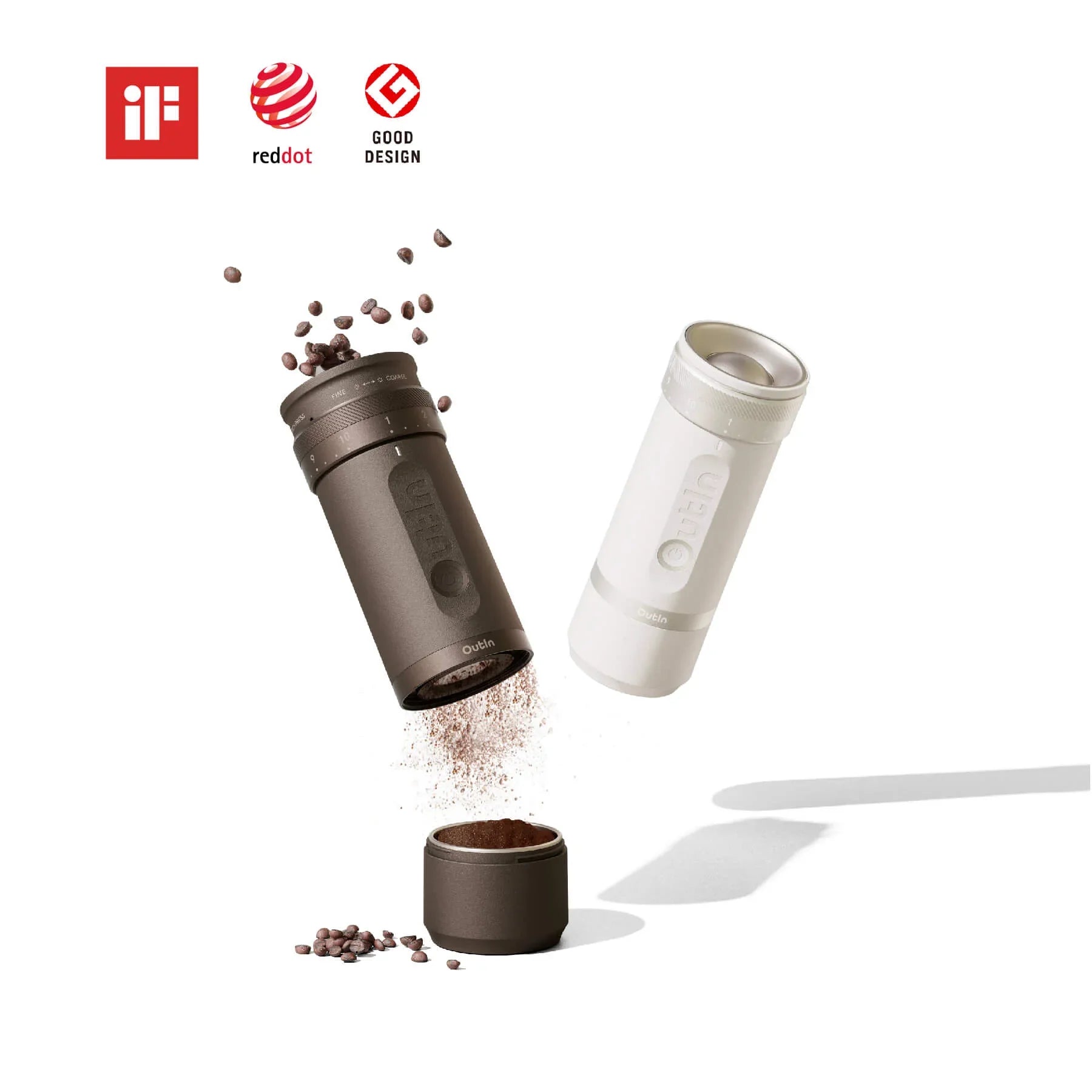
The OutIn Fino Portable Electric Coffee Grinder can grind across espresso and coarser brewing ranges, but oily beans should still be handled with normal grinder care. Do not assume that a cordless burr grinder is maintenance-free or that surface oil will pass through without leaving residue.

OutIn Fino Portable Electric Coffee Grinder
OutIn’s current Fino instructions recommend wiping the exterior with a slightly damp soft cloth while keeping moisture away from internal components. The inner burr, bean hopper, and grinding chamber should be cleaned with an appropriate brush or air blower according to the disassembly instructions. The metal burrs and electrical components should not be rinsed with water.
When switching from a dark, oily roast to a lighter coffee, clear retained particles before judging the new beans. Otherwise, old dark-roast grounds may make the first lighter-roast dose taste more bitter or roasty than it actually is.
Grind settings may also need adjustment. Dark-roasted beans tend to be more brittle and soluble, so the same numerical setting used for a light roast may not produce the same flow or flavor. Treat any recommended setting as a starting point and adjust according to the actual extraction.
How to Store Oily Coffee Beans

Store oily beans in an airtight, opaque container at a stable room temperature, away from sunlight, steam, and the stove. Use a container close to the amount of coffee being stored so there is not excessive empty air inside.
Avoid keeping daily-use beans in the refrigerator. Repeated removal can expose the coffee to temperature changes and condensation. Moisture on oily surfaces can make beans stickier and create additional problems in a grinder.
If a large quantity must be preserved, divide fresh beans into sealed single-use or small-batch portions before freezing. Open each portion only after removing it from the freezer, and do not repeatedly thaw and refreeze the same bag. Properly freezing coffee beans is different from keeping one frequently opened container in cold storage.
Buy an amount that can be used while the flavor remains enjoyable. Storage can slow deterioration, but it cannot restore aromas that have already oxidized or escaped.
When Should You Avoid Oily Beans?
Avoid a particular bag when the aroma and flavor show clear deterioration, not merely because the beans shine. Rancid, musty, chemical, or rotten odors are stronger warning signs than normal dark-roast oil.
Oily beans may also be a poor practical choice when the grinder or automatic machine specifically warns against them. Some equipment depends on beans moving freely through a hopper and may be more sensitive to sticky surfaces.
Finally, choose a different roast when the expected flavor does not match your preference. Someone seeking floral acidity and clear origin character may be happier with a dry-looking light roast. Someone who enjoys dark chocolate, smoke, and traditional espresso bitterness may prefer a visibly oily dark roast that is still fresh and properly stored.
Conclusion
Coffee beans become oily when roasting changes their internal structure and allows natural lipids to migrate toward the surface. The effect is most common in dark roasts and may become more noticeable during storage.
Oiliness alone is neither a quality guarantee nor proof that coffee has spoiled. Evaluate the roast date, aroma, flavor, storage history, and intended brewing method together. When oily beans suit your taste, store them carefully and clean the grinder often enough to prevent stale oil and retained grounds from affecting later cups.
FAQs
Are oily coffee beans better for espresso?
Not automatically. Dark, oily beans can create a traditional roasty espresso with substantial bitterness and body, while drier light or medium roasts may highlight acidity and origin character. The better choice depends on the desired flavor and extraction recipe.
Should I wipe oil off coffee beans before grinding?
No. Wiping does not reverse the roast or remove oil within the bean, and paper or cloth may introduce lint or contamination. Manage residue by storing the coffee properly and cleaning the grinder according to its instructions.
Can oily and dry coffee beans be blended together?
They can, but different roast levels may vary in density, brittleness, and solubility. A mixed batch may grind and extract less predictably than beans roasted to a similar level, so test a small amount before preparing a large blend.
Why do flavored coffee beans sometimes look oily?
Some flavored coffees receive oils or flavoring compounds after roasting. Their shine may therefore come from both natural coffee lipids and an applied coating. Check the ingredient label and clean the grinder thoroughly because added flavor can remain in later batches.
Why can two dark roasts have different amounts of surface oil?
Roast temperature, development time, cooling, bean structure, storage duration, and packaging all influence oil migration. Similar-looking roast colors do not guarantee identical surface texture or flavor.
